

Why Are Precision Metal Stamping Parts Critical for Automotive and Electronics Applications
2026-11-09
Modern vehicles and electronic devices share a hidden foundation: Precision Metal Stamping Parts produced by Qiren. These components quietly carry current, secure sensors, shield circuits, and hold assemblies together under vibration, heat, and repeated cycling. As automotive and electronics designs become lighter, denser, and more electrified, the margin for dimensional error shrinks, and the role of Precision Metal Stamping Parts moves from commodity input to performance enabler. Qiren manufactures these parts to tolerances, finishes, and repeatability levels that keep both sectors running reliably at scale.
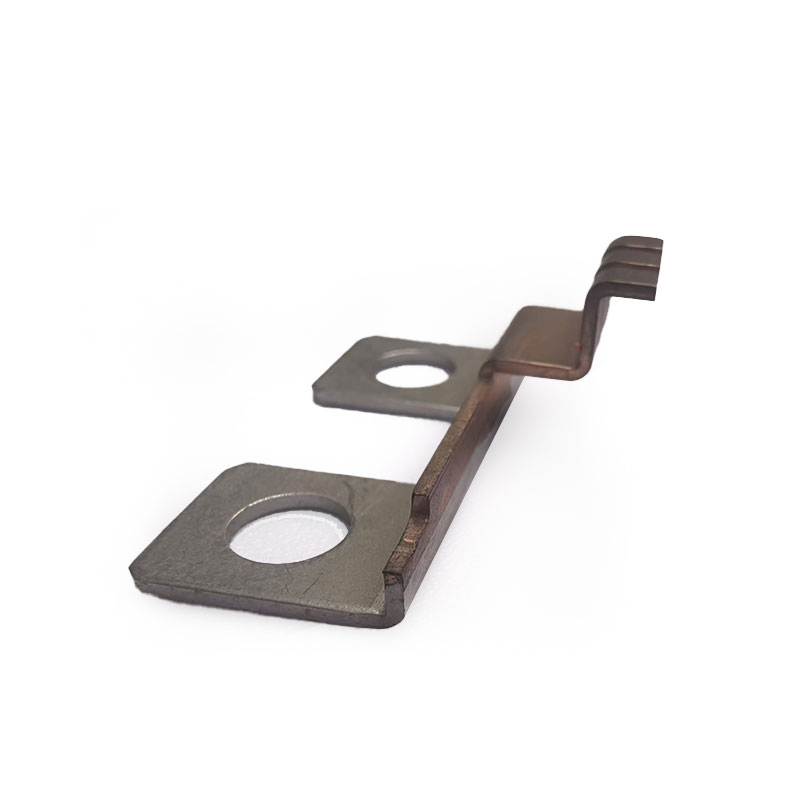
What Makes Precision Metal Stamping Parts Essential in Automotive Applications
Automotive systems demand consistency across millions of units and more than a decade of service life. Precision Metal Stamping Parts meet that demand through high-speed progressive dies, stable material selection, and in-process inspection.
| Automotive Requirement | How Precision Metal Stamping Parts Deliver | Typical Qiren Capability |
|---|---|---|
| Crash and fatigue resistance | Grain-controlled alloys, controlled bend radii | High-strength steel and aluminum stamping |
| Electrical conductivity | Oxygen-free copper and brass contacts | Plated Cu alloys with low resistance |
| Weight reduction | Thin-gauge high-strength materials | 0.1–3.0 mm gauge range |
| Dimensional consistency | Progressive die with hard tooling | ±0.01–0.05 mm tolerance |
| Corrosion protection | Selective plating and passivation | Zinc, nickel, tin, and trivalent finishes |
Key automotive uses include battery contact plates, connector terminals, sensor housings, busbars, and structural brackets. In electric vehicles, Precision Metal Stamping Parts from Qiren support high-current interconnects where contact resistance and thermal stability directly affect range and safety.
Why Electronics Applications Rely on Precision Metal Stamping Parts
Electronic devices pack more function into less space. Precision Metal Stamping Parts provide the conductive paths, shielding, and mechanical retention that miniaturized designs require.
-
Connector contacts and pins — fine pitch, low insertion force, stable contact resistance.
-
EMI/RFI shielding cans — thin walls with tight flatness for board-level mounting.
-
Lead frames — coplanarity and burr control for reliable soldering.
-
Battery and grounding tabs — consistent spring force and weldability.
-
Heat spreaders — controlled thickness and surface finish for thermal transfer.
Qiren supports these applications with reel-to-reel stamping, automated optical inspection, and clean packaging that protects fine features during shipping and assembly.
How Precision Metal Stamping Parts Compare with Alternative Processes
| Criterion | Precision Metal Stamping Parts | CNC Machining | Die Casting |
|---|---|---|---|
| High-volume cost | Low per-unit cost | High per-unit cost | Moderate |
| Cycle time | Seconds per part | Minutes per part | Minutes per part |
| Tolerance | ±0.01–0.05 mm | ±0.005 mm | ±0.05–0.1 mm |
| Material utilization | 70–85% | 30–50% | 60–75% |
| Best fit | Thin, flat, conductive parts | Complex 3D geometry | Thick housings |
For thin, flat, high-volume components, Precision Metal Stamping Parts offer the best balance of cost, speed, and repeatability. Qiren helps engineering teams evaluate tooling investment against annual volume before committing to a stamping program.
FAQ: Precision Metal Stamping Parts
Q: What tolerances can Qiren achieve on Precision Metal Stamping Parts?
A: Qiren routinely holds ±0.01–0.05 mm on critical features, with tighter control available on selected dimensions through in-die sensing and post-stamp verification. Tolerance capability depends on material gauge, feature geometry, and die design, so Qiren reviews each drawing and confirms achievable limits before tooling release.
Q: Which materials are recommended for Precision Metal Stamping Parts in automotive and electronics?
A: Common choices include copper alloys for conductivity, stainless steel for corrosion resistance, aluminum for weight reduction, and high-strength steel for structural parts. Qiren advises on material temper, plating compatibility, and spring properties so that Precision Metal Stamping Parts meet both electrical and mechanical requirements.
Q: How does Qiren ensure quality and consistency in Precision Metal Stamping Parts production?
A: Qiren applies PPAP documentation, first-article inspection, SPC monitoring, and automated optical inspection throughout production. Each lot of Precision Metal Stamping Parts is traceable to material heat number and die history, supporting IATF 16949 and ISO 9001 expectations for automotive and electronics customers.
Partner with Qiren for Reliable Precision Metal Stamping Parts
From battery contacts to EMI shields, Qiren combines tooling expertise, material knowledge, and disciplined quality control to deliver Precision Metal Stamping Parts that perform in demanding automotive and electronics environments. Contact us today to discuss your drawings, volumes, and tolerance requirements, and let Qiren build a stamping solution that meets your cost and reliability targets.