

Why Are 974nm and 976nm Pump Laser Modules Essential for Fiber Lasers?
2026-11-05
Article Summary
A 974nm 976nm Pump Laser Module is a fiber-coupled semiconductor laser source designed to deliver controlled pump light to optical systems. These modules can support fiber laser pumping, erbium-doped fiber amplifier systems, and specialized optical experiments. This article explains their operating principles, wavelength characteristics, key specifications, application scenarios, integration requirements, and purchasing considerations. It also introduces how Shenzhen Box Optronics Technology Co., Ltd. supports optical component requirements with fiber-coupled laser and optical module solutions.
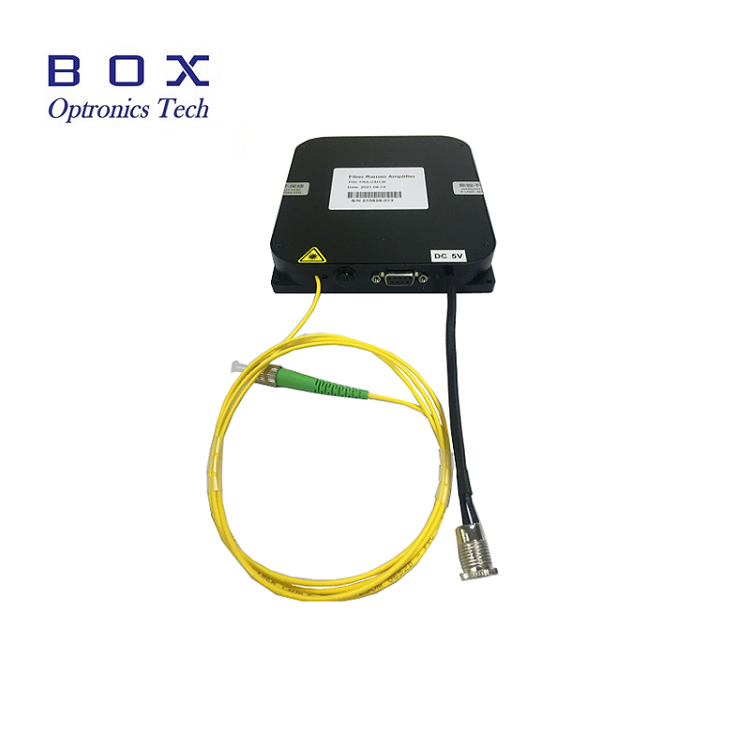
1. Why Are 974nm and 976nm Pump Laser Modules Important?
Fiber laser systems depend on carefully controlled optical energy to achieve their intended performance. The pump source supplies the energy required to excite active ions in a doped optical fiber. If the pump wavelength or output power does not match the system design, the result may be reduced conversion efficiency, inconsistent amplification, or additional thermal stress.
A 974nm 976nm Pump Laser Module addresses these requirements by providing a compact, fiber-coupled optical source with a defined operating wavelength. Its performance can be particularly important in optical systems where wavelength control and output consistency influence the overall operating conditions.
Three Reasons These Wavelengths Matter
- Controlled optical excitation: The pump wavelength can be selected to match the absorption characteristics of the active fiber material.
- System efficiency: Appropriate wavelength matching helps improve the utilization of supplied optical energy and reduce unnecessary power consumption.
- Stable operation: Temperature management and wavelength stabilization help maintain predictable optical performance over time.
2. How Does a Pump Laser Module Work?
A pump laser module generally uses a semiconductor laser diode to generate optical energy. The generated light is coupled into an optical fiber and delivered to an active fiber or another optical component within the target system.
In a fiber amplifier, the pump light interacts with doped ions in the active fiber. The ions absorb the supplied energy and move into higher energy states. When an appropriate optical signal passes through the active medium, stimulated emission can amplify that signal.
Key Components of a Pump Laser Module
- Semiconductor laser chip: Generates optical energy at the designed wavelength.
- Fiber Bragg Grating (FBG): Can be used for wavelength stabilization by providing wavelength-selective optical feedback.
- Temperature control system: A thermoelectric cooler (TEC), where included, helps regulate the operating temperature of the laser chip.
- Drive circuit: Controls the electrical current supplied to the laser diode and supports stable operation.
- Fiber coupling assembly: Transfers the optical output into the selected fiber type.
- Electrical interface: Provides power, control, and communication connections for system integration.
Understanding the Optical Pumping Process
The operating process can be summarized in four stages:
- The electrical driver supplies controlled current to the semiconductor laser chip.
- The laser chip generates optical output at its designed wavelength.
- The optical signal passes through the coupling structure and enters the output fiber.
- The pump light is delivered to the target optical system to provide the energy required for its operation.
In practical applications, the quality of each stage affects the performance of the complete optical system. Proper current control, optical coupling, temperature management, and connector handling are therefore essential.
3. 974nm vs. 976nm: Understanding the Wavelength Difference
Although the numerical difference between 974nm and 976nm is only 2nm, this difference can be relevant in precision optical applications. The absorption spectrum of an active fiber is wavelength-dependent, so engineers need to evaluate the relationship between the selected pump wavelength and the actual absorption characteristics of the gain medium.
What Makes 974nm Different?
A 974nm pump source can be used in optical pumping arrangements designed around compatible absorption characteristics. Its suitability depends on the dopant composition, fiber design, operating temperature, and system configuration. Engineers should evaluate the measured absorption spectrum rather than assume that a nominal wavelength guarantees a particular efficiency.
What Makes 976nm Different?
976nm is widely recognized as an important absorption region for ytterbium-doped fiber systems. It is also relevant to various erbium-related and erbium-ytterbium co-doped optical designs, depending on the material and intended operating configuration. Accurate wavelength control can help optimize the interaction between the pump source and the active fiber.
| Comparison | 974nm Pump Laser | 976nm Pump Laser |
|---|---|---|
| Nominal wavelength | 974nm | 976nm |
| Typical consideration | Matching the absorption characteristics of the selected gain medium | Compatibility with the designed pump absorption region |
| Wavelength control | Important for consistent optical excitation | Important for consistent optical excitation |
| Selection basis | Fiber absorption spectrum and system requirements | Fiber absorption spectrum and system requirements |
| Integration factors | Power, fiber type, connector, and temperature | Power, fiber type, connector, and temperature |
Neither wavelength is automatically better in every application. The right choice depends on the optical gain medium, required pump efficiency, operating conditions, and the design of the complete laser or amplifier system.
4. Key Technical Specifications to Evaluate
For purchasing engineers and optical system developers, technical specifications provide a practical basis for evaluating whether a pump laser module is suitable for a project. Looking beyond the nominal wavelength helps avoid compatibility issues during integration and testing.
4.1 Operating Wavelength
Confirm whether the required operating wavelength is 974nm or 976nm. Also check wavelength tolerance and the conditions under which the wavelength is measured. Temperature can influence semiconductor laser behavior, making thermal control an important consideration.
4.2 Optical Output Power
Output power determines how much pump energy can be delivered to the optical system. Different applications require different power levels. Selecting excessive output power can increase thermal demands, while insufficient power may prevent the system from achieving its target performance.
Available configurations for the Box Optronics product include output power options within the 200–680mW range, subject to the specified configuration. Customized requirements should be confirmed with the manufacturer before ordering.
4.3 Output Power Stability
Power instability can introduce fluctuations into an optical amplifier or experimental setup. Both short-term and long-term stability should be considered because they describe different operating periods.
4.4 Fiber Type and Connector
Fiber compatibility is essential for efficient optical transmission. Common options in this product category include HI1060 single-mode fiber and PM980 polarization-maintaining fiber. FC/APC connectors are also commonly specified for fiber-coupled pump sources.
4.5 Electrical and Mechanical Parameters
Check the supply voltage, current requirements, communication interface, package dimensions, and mounting arrangement. A module that meets the optical requirements but does not fit the equipment enclosure may create unnecessary redesign costs.
Reference Technical Specifications
The following table summarizes the specifications published for the 974nm 976nm Pump Laser Module by Shenzhen Box Optronics Technology Co., Ltd. Confirm the exact configuration and guaranteed limits on the quotation or product datasheet before procurement.
| Parameter | Specification | Unit / Description |
|---|---|---|
| Operating wavelength | 974 / 976 | nm |
| Output power | 200–680 | mW |
| Short-term power instability | ≤0.02 | dB, 15 minutes |
| Long-term power instability | ≤0.05 | dB, 8 hours |
| Optical connector | FC/APC | Fiber connector |
| Fiber type | HI1060 / PM980 | Single-mode / PM fiber |
| Module dimensions | 150 × 125 × 30 | mm |
| Module power supply | DC 5V / 4A | Electrical input |
| Operating temperature | -20 to +65 | °C |
| Storage temperature | -40 to +85 | °C |
Note: The specifications above are product reference values, not universal specifications for all 974nm or 976nm pump laser modules. Actual performance depends on the selected model and confirmed configuration.
5. Main Applications of 974nm and 976nm Pump Lasers
The combination of wavelength control, fiber coupling, and stable optical output makes these pump sources useful in several specialized photonics applications.
5.1 Fiber Laser Systems
Fiber lasers use active optical fibers to generate laser output. A suitable pump source supplies the energy required to excite the active medium. Selecting the correct pump wavelength and output power is important for achieving the designed laser performance.
5.2 Erbium-Doped Fiber Amplifiers (EDFAs)
EDFAs amplify optical signals through stimulated emission in erbium-doped fiber. Pump lasers provide the energy needed to establish population inversion. The suitability of a 974nm or 976nm source depends on the amplifier architecture, active fiber absorption characteristics, and pump configuration.
5.3 Erbium-Ytterbium Co-Doped Fiber Systems
Co-doped fibers combine erbium and ytterbium ions to support particular energy-transfer and amplification designs. Pump wavelength selection must account for the absorption behavior of both dopants and the intended energy-transfer process.
5.4 Nonlinear Optics Research
Research laboratories use controlled pump sources to investigate optical interactions in specialty fibers and other nonlinear materials. Stable optical output helps researchers maintain repeatable experimental conditions and evaluate system behavior.
5.5 Optical Component Testing
Fiber-coupled pump lasers can also serve as light sources in the evaluation of optical components, including fiber couplers, filters, isolators, wavelength division multiplexers, and other photonic devices. The appropriate wavelength and optical power depend on the test procedure.
6. How to Choose the Right Pump Laser Module
Choosing an optical component based only on its product name or nominal output power can lead to costly integration problems. A structured selection process makes it easier to compare suppliers and identify the most suitable configuration.
Step 1: Define the Target Application
Determine whether the module will be used in a fiber laser, EDFA, co-doped fiber system, or laboratory setup. Each application may have different requirements for wavelength, power, and polarization.
Step 2: Confirm the Required Wavelength
Use the absorption characteristics of the active fiber and the system design to determine whether 974nm or 976nm is appropriate. Confirm the wavelength tolerance and operating temperature conditions.
Step 3: Calculate the Required Pump Power
Consider the optical power needed at the input of the active fiber, not just the nominal output of the laser module. Fiber coupling losses, connector losses, optical components, and system architecture all affect the power that reaches the gain medium.
Step 4: Select the Correct Fiber
Choose between single-mode and polarization-maintaining fiber according to the system's optical design. Confirm the fiber specification, connector type, pigtail length, and polarization requirements.
Step 5: Check Mechanical and Electrical Compatibility
Verify the module dimensions, mounting points, supply voltage, power consumption, and communication interface. These details are especially important for compact instruments and OEM equipment.
Step 6: Request Test Data and Confirm Quality Requirements
Ask for relevant test information, including wavelength, output power, stability, and operating conditions. If the module will be used in a critical application, discuss acceptance criteria and any required production testing before placing a bulk order.
Purchasing Checklist
- Required wavelength: 974nm or 976nm.
- Required output power and adjustment range.
- Single-mode or polarization-maintaining fiber.
- Connector type and fiber pigtail length.
- Short-term and long-term power stability.
- Temperature control and operating environment.
- Module dimensions and electrical supply.
- Communication and control requirements.
- Testing documentation, warranty, and delivery schedule.
7. Why Do Output Stability and Thermal Control Matter?
Optical stability is not simply a specification for comparing products. It directly affects how consistently a pump source performs inside an optical system.
Short-Term Stability
Short-term stability describes variations in output over a relatively short measurement period. It is particularly relevant to experiments and optical systems where small fluctuations can influence measurement repeatability or amplification behavior.
Long-Term Stability
Long-term stability evaluates output consistency over an extended period. This is important for equipment that operates continuously or requires repeatable performance across multiple operating cycles.
Temperature Management
Semiconductor laser wavelength and output characteristics can be influenced by temperature. TEC-based temperature control can help maintain a more consistent operating condition, provided the module is designed with the appropriate cooling structure and the surrounding system offers adequate heat dissipation.
For system integrators, it is important to consider both the internal thermal control of the laser and the external operating environment. A well-controlled laser module can still experience performance issues if it is installed in an enclosure with insufficient ventilation or excessive ambient heat.
8. Module Integration and Installation Considerations
Correct installation helps protect the laser source and maintain optical performance throughout the equipment's service life.
Optical Connector Protection
Keep FC/APC connectors clean and protected when they are not connected. Contamination on the fiber end face can cause insertion loss, unstable measurements, or optical damage. Always use suitable fiber inspection and cleaning procedures before making a connection.
Electrical Connection
Confirm the specified power supply before connecting the module. Incorrect voltage, unstable electrical input, or improper wiring can damage the driver circuit and semiconductor laser chip.
Thermal Installation
Follow the manufacturer's mounting and heat-dissipation recommendations. Avoid installing the module close to high-temperature components without adequate thermal separation.
Optical Safety
Invisible infrared laser radiation can cause eye injury. Never look directly into an optical connector or fiber output. Use appropriate laser safety procedures, protective equipment, and controlled working practices during installation and testing.
Control and Communication
For modules using serial communication, confirm the interface, command protocol, and operating parameters before integrating the source into automated equipment. Verify the control sequence and fault-handling requirements during system commissioning.
9. Common Problems and Practical Solutions
Understanding typical problems can help engineering teams reduce troubleshooting time and prevent unnecessary component replacement.
| Common Problem | Possible Cause | Recommended Action |
|---|---|---|
| Low optical output | Dirty connector, coupling loss, or incorrect drive conditions | Inspect the optical path and verify the electrical settings. |
| Unstable optical power | Temperature variation or unstable power supply | Check thermal conditions and electrical input. |
| Incorrect wavelength | Temperature effects or incorrect model selection | Verify the model and measure wavelength under specified conditions. |
| Communication failure | Incorrect interface configuration or wiring | Check the communication protocol and connection. |
| Excessive insertion loss | Fiber mismatch or connector contamination | Inspect the fiber type, connector, and end-face condition. |
| Unexpected shutdown | Protection activation or electrical/thermal fault | Check operating conditions and consult the manufacturer. |
When a problem occurs, avoid repeatedly increasing the drive current to compensate for low optical output. First identify the source of the problem and follow the manufacturer's troubleshooting instructions. Uncontrolled adjustments may shorten component life or cause permanent damage.
10. Why Work with Shenzhen Box Optronics Technology Co., Ltd.?
Selecting a pump laser supplier involves more than comparing prices. Buyers also need confidence in product specifications, optical performance, technical communication, and the supplier's ability to support their application requirements.
Shenzhen Box Optronics Technology Co., Ltd. focuses on fiber optic modules, fiber-coupled lasers, laser components, and customized optical products. The company serves customers in optical communication, optical sensing, and related photonics fields.
Product-Focused Optical Solutions
Box Optronics provides optical product solutions for different system requirements, including pump laser sources and fiber-related components. Its 974nm 976nm Pump Laser Module is designed for applications such as fiber laser pumping, erbium-doped fiber amplifier systems, and nonlinear optics research.
Configurable Product Options
Different optical projects require different combinations of wavelength, output power, and fiber configuration. Discussing these requirements with the supplier before ordering helps ensure that the selected product matches the intended application.
Technical Communication and Project Support
Clear communication is essential when purchasing specialized optical components. Providing the target application, required optical parameters, and integration details enables the supplier to evaluate the configuration more effectively.
What Information Should You Include in an Inquiry?
- Target wavelength: 974nm or 976nm.
- Required optical output power.
- Fiber type: HI1060 or PM980, if specified.
- Connector type and fiber length.
- Module or benchtop package preference.
- Electrical supply and communication requirements.
- Estimated order quantity and intended application.
By sharing these details, buyers can obtain more relevant product information and reduce the time needed to confirm technical compatibility.
11. Frequently Asked Questions
Q1: What is a 974nm 976nm Pump Laser Module?
A 974nm 976nm Pump Laser Module is a semiconductor-based optical source that generates pump light at a nominal wavelength of 974nm or 976nm. It delivers optical energy through a fiber output and is used in compatible fiber laser, optical amplifier, and research systems.
Q2: What is the main difference between 974nm and 976nm pump lasers?
The main difference is the nominal operating wavelength. The two wavelengths interact differently with the absorption spectrum of an active fiber. The appropriate choice depends on the dopant composition, fiber design, and required system performance.
Q3: Can a 976nm pump laser be used in an EDFA?
It may be suitable for specific amplifier architectures, depending on the active fiber's absorption characteristics and system design. Buyers should confirm the required pump wavelength and compatibility with the EDFA manufacturer or system engineer.
Q4: What output power options are available?
The Box Optronics product listing specifies an output power range of 200–680mW. The available power configuration should be confirmed according to the selected model and project requirements.
Q5: What is the purpose of FBG wavelength stabilization?
A Fiber Bragg Grating provides wavelength-selective optical feedback. In a suitably designed laser, this helps control the emission wavelength and improve spectral consistency under specified operating conditions.
Q6: What fiber types are supported?
Common configurations listed for this product include HI1060 single-mode fiber and PM980 polarization-maintaining fiber. The correct option depends on the optical system and polarization requirements.
Q7: Why is output power stability important?
Stable output helps maintain consistent pump energy in the target optical system. This is important for repeatable measurements, reliable amplifier operation, and predictable system performance.
Q8: Does the pump laser module require temperature control?
Temperature management is important because semiconductor laser characteristics can change with temperature. The exact control method depends on the module design. Check whether TEC control is included in the selected configuration.
Q9: Is a module package better than a benchtop package?
Neither package is universally better. A module is generally more suitable for OEM equipment and compact system integration, while a benchtop version is useful for laboratory testing, development, and standalone operation.
Q10: What should I check before purchasing a pump laser module?
Check the wavelength, output power, stability, fiber type, connector, power supply, package dimensions, operating temperature, and control interface. Also request the relevant datasheet and confirm the exact configuration before placing an order.
Conclusion: Building More Reliable Optical Systems Starts with the Right Pump Source
974nm and 976nm pump laser modules play an important role in optical systems that require controlled wavelength performance and dependable pump power. Their suitability depends on the absorption characteristics of the active fiber, the required optical output, and the electrical and mechanical conditions of the complete system.
For engineers and purchasing teams, evaluating wavelength accuracy, output stability, fiber compatibility, thermal management, and package requirements is essential to making an informed decision. A well-matched pump source can help simplify integration and support consistent system operation.
Shenzhen Box Optronics Technology Co., Ltd. provides fiber-coupled laser and optical module solutions for customers working on fiber lasers, optical amplifiers, and specialized photonics applications.
Looking for a Reliable 974nm or 976nm Pump Laser Module?
Choosing the right pump laser is essential for achieving stable optical performance and smooth system integration. Whether you need a specific wavelength, customized output power, or a suitable fiber configuration, Box Optronics is ready to discuss your project requirements.
Contact us today to learn more about our 974nm 976nm Pump Laser Module, request technical specifications, and find an optical solution that fits your application.
Contact us to discuss your requirements and request a quotation.
Contact Us for More Details