

What Safety Features Should a 6U Portable DC Rack-Mounted Load Bank Include for High-Voltage Testing
2026-11-04
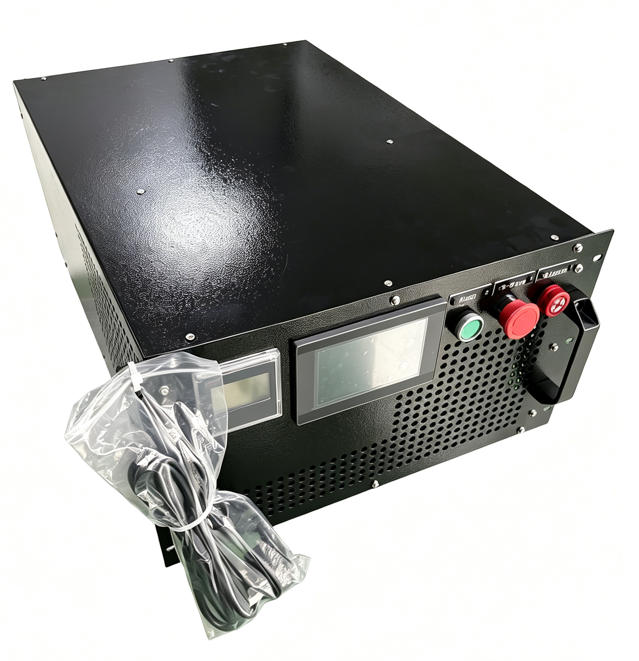
High-voltage DC testing demands equipment that protects both the operator and the asset under test. A 6U Portable DC rack-mounted load bank from RST is engineered around layered safety architecture rather than a single protective device. This article examines the safety features that matter most when validating batteries, rectifiers, and DC power systems at elevated voltages, and explains how RST integrates them into a compact 6U chassis.
Core Safety Features to Specify
The following list represents the minimum safety baseline for high-voltage DC testing. Each item should be verified against the supplier's datasheet before procurement.
-
Overvoltage and undervoltage protection with user-configurable trip thresholds
-
Overcurrent and short-circuit protection using fast-acting DC breakers and semiconductor fuses
-
Over-temperature protection via distributed NTC sensors and automatic load derating
-
Ground fault detection with continuous insulation monitoring
-
Emergency stop circuit that physically isolates the DC bus
-
Interlock and door-switch inputs to prevent operation with enclosure access open
-
Arc flash mitigation through sealed busbars and arc-rated enclosure design
-
Redundant cooling monitoring with fan-failure alarms and thermal shutdown
-
Remote E-stop and monitoring interfaces for unattended test sequences
-
Battery reverse-polarity protection to prevent damage during misconnection
RST Safety Architecture Compared Across Protection Layers
| Protection Layer | Typical Implementation | RST Design Approach | Benefit for High-Voltage Testing |
|---|---|---|---|
| Electrical isolation | Mechanical breaker | Breaker plus contactor isolation | Full bus de-energization on fault |
| Overcurrent | Fuse only | Breaker, fuse, and electronic trip | Coordinated protection across ranges |
| Thermal | Single thermostat | Multi-point NTC with derating | Early warning before shutdown |
| Ground fault | Optional module | Integrated insulation monitoring | Continuous leakage detection |
| Operator interface | Local panel | Local and remote E-stop | Safe control from outside the test cell |
| Enclosure safety | Standard sheet metal | Arc-rated enclosure with inter locks | Reduced arc flash exposure |
The table illustrates how RST combines passive and active protection rather than relying on a single layer. For a 6U Portable DC rack-mounted load bank, this coordination is essential because the compact form factor concentrates power density into a small volume.
Design Considerations for High-Voltage DC
High-voltage DC arcs do not self-extinguish as readily as AC arcs, so DC-rated interruption devices are mandatory. RST specifies DC-rated breakers and fuses throughout the 6U Portable DC rack-mounted load bank, and the enclosure is designed to contain arc energy rather than vent it toward personnel. Insulation monitoring should be continuous, not periodic, because battery systems can develop faults between test cycles. Remote monitoring interfaces allow engineers to supervise tests from outside the hazardous zone, which is a practical requirement in most laboratory safety policies.
FAQ
What voltage range can a 6U Portable DC rack-mounted load bank safely test?
RST configures the 6U Portable DC rack-mounted load bank for common high-voltage DC ranges up to 1000V and beyond on request, with protection thresholds set to the specific test profile.
Does a 6U Portable DC rack-mounted load bank include ground fault protection as standard?
Yes, RST integrates continuous insulation monitoring and ground fault detection as standard on high-voltage configurations, with alarm and trip outputs available for external control systems.
How does a 6U Portable DC rack-mounted load bank protect against cooling failure during long tests?
The 6U Portable DC rack-mounted load bank uses multi-point temperature sensing with automatic derating and thermal shutdown, so a fan failure triggers a controlled reduction rather than an abrupt loss of load.
Can the safety interlocks on a 6U Portable DC rack-mounted load bank be integrated with an external test cell?
RST provides interlock and E-stop terminals that interface with external safety circuits, allowing the load bank to participate in a facility-wide safety chain.
Contact Us
Specify safety with confidence. Contact RST today to discuss your high-voltage DC test requirements and configure a 6U Portable DC rack-mounted load bank that meets your site's safety standards.