

What Makes a High Speed M.2 NVMe 2280 PCIe 3.0 Hard Disk Faster Than a Regular SSD
2026-10-14
When you open a modern laptop or desktop, the difference between a sluggish system and a responsive one often comes down to storage. A High Speed M.2 NVMe 2280 PCIe 3.0 Hard Disk from GUDGA uses the NVMe protocol over PCIe lanes, bypassing the bottlenecks of older SATA-based drives. This article explains the technical reasons behind that speed gap, with clear comparisons and practical guidance.
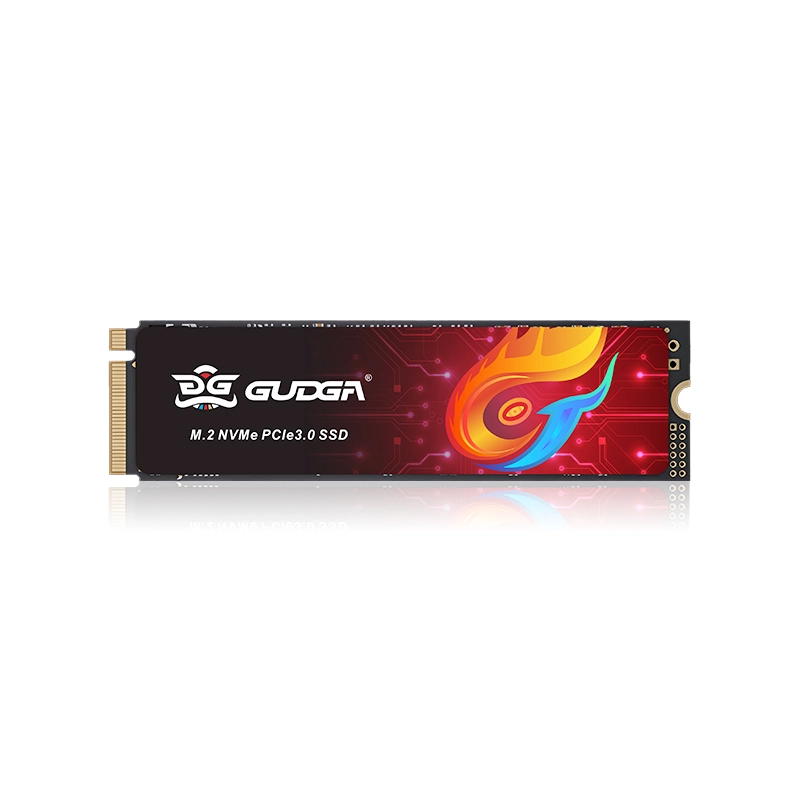
The Core Architecture Difference
Regular SSDs typically use the SATA interface and the AHCI protocol, which was originally designed for mechanical hard drives. That legacy creates a ceiling. A High Speed M.2 NVMe 2280 PCIe 3.0 Hard Disk, by contrast, communicates directly over PCIe 3.0 lanes using NVMe, a protocol built specifically for flash memory.
| Feature | Regular SATA SSD | High Speed M.2 NVMe 2280 PCIe 3.0 Hard Disk |
|---|---|---|
| Interface | SATA III | PCIe 3.0 x4 |
| Protocol | AHCI | NVMe |
| Max Theoretical Bandwidth | 6 Gbps | 32 Gbps |
| Typical Sequential Read | 550 MB/s | 3,000–3,500 MB/s |
| Queue Depth | 1 command queue, 32 commands | 64,000 command queues |
| Latency | Higher | Significantly lower |
Why NVMe and PCIe 3.0 Matter
The NVMe protocol removes the single-command-queue limitation of AHCI. A High Speed M.2 NVMe 2280 PCIe 3.0 Hard Disk can handle thousands of parallel commands, which mirrors how modern CPUs and applications actually request data. PCIe 3.0 x4 provides roughly 3.94 GB/s of theoretical bandwidth, enough for real-world sequential speeds above 3,000 MB/s.
GUDGA designs its M.2 NVMe drives to take full advantage of this architecture, pairing high-quality NAND flash with controllers that sustain performance under load.
Key Technical Advantages
-
Direct CPU connection: PCIe lanes link the drive closer to the processor, cutting controller overhead.
-
Lower latency: NVMe reduces command processing time, which benefits random 4K reads and writes.
-
Higher queue depth: 64,000 queues versus one, enabling efficient multitasking.
-
No SATA bottleneck: The drive is not constrained by a 6 Gbps interface.
-
Compact 2280 form factor: Fits standard M.2 slots without cables or drive bays.
Real-World Performance Gains
For everyday tasks, the difference is noticeable. Boot times, application launches, and large file transfers all benefit. In gaming, a High Speed M.2 NVMe 2280 PCIe 3.0 Hard Disk reduces level loading and texture streaming delays. For content creators working with 4K video, the sustained read and write rates mean less waiting during scrubbing and export.
GUDGA drives are tested for consistent throughput, so the performance advantage holds up beyond short bursts.
FAQ
Is a High Speed M.2 NVMe 2280 PCIe 3.0 Hard Disk compatible with PCIe 4.0 motherboards?
Yes. PCIe is backward compatible, so a High Speed M.2 NVMe 2280 PCIe 3.0 Hard Disk will work in a PCIe 4.0 M.2 slot, though it will run at PCIe 3.0 speeds. You still get the full benefit of the NVMe protocol and the drive's rated performance.
Does a High Speed M.2 NVMe 2280 PCIe 3.0 Hard Disk run hotter than a regular SSD?
It can run warmer because of higher throughput, but most drives, including GUDGA models, include thermal management. A heatsink or motherboard M.2 shield helps maintain stable performance during sustained workloads.
Can I use a High Speed M.2 NVMe 2280 PCIe 3.0 Hard Disk as my only storage drive?
Absolutely. A High Speed M.2 NVMe 2280 PCIe 3.0 Hard Disk can serve as a primary boot and storage drive. Its capacity options and speed make it suitable for operating systems, applications, and large project files.
Final Thoughts
The speed advantage comes from architecture, not marketing. NVMe over PCIe 3.0 removes the SATA bottleneck, increases queue depth, and lowers latency. GUDGA builds High Speed M.2 NVMe 2280 PCIe 3.0 Hard Disk solutions that deliver these benefits reliably.
Contact us today to learn more about GUDGA storage products and find the right High Speed M.2 NVMe 2280 PCIe 3.0 Hard Disk for your system.