

What Are the Key Specs to Check in a Body Worn Camera 4G/5G Antenna
2026-11-05
Selecting the right Body Worn Camera 4G/5G Antenna is one of the most consequential decisions in a law enforcement or security deployment. A poorly matched antenna can degrade video streaming, delay cloud uploads, and undermine officer safety. At Qianmu, we have supported hundreds of field deployments, and the specifications below are the ones that consistently separate reliable performance from intermittent failure.
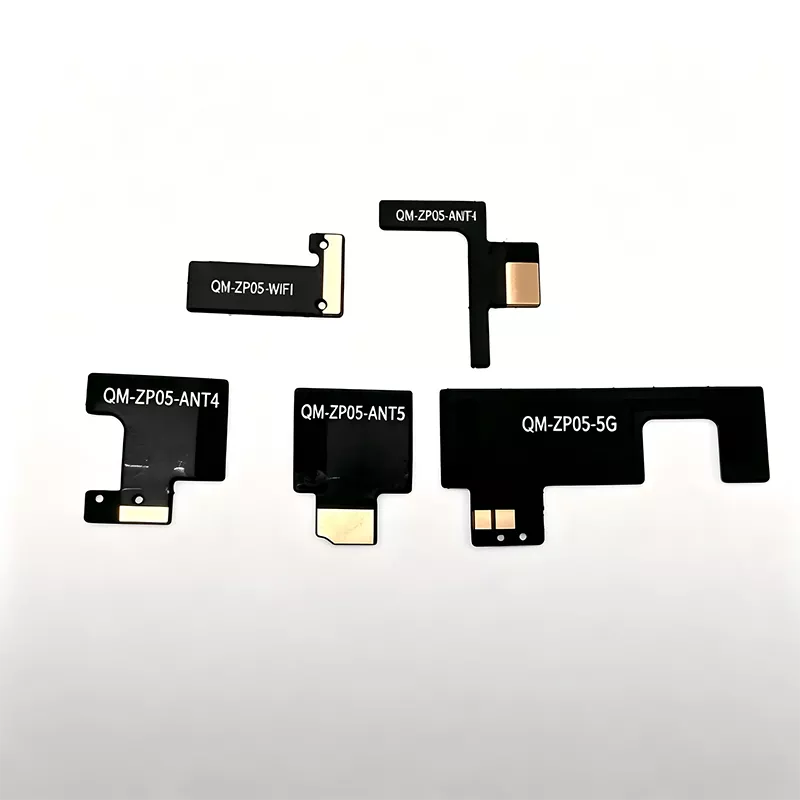
1. Frequency Bands and Carrier Coverage
The antenna must cover the bands your network actually uses. A Body Worn Camera 4G/5G Antenna that supports only legacy LTE bands will underperform on modern 5G sub-6 GHz networks.
| Band Group | Typical Range | Why It Matters |
|---|---|---|
| LTE low band | 600–900 MHz | Long-range coverage in rural areas |
| LTE mid band | 1700–2200 MHz | Urban macro coverage |
| 5G sub-6 | 3.3–3.8 GHz | High-throughput video upload |
| 5G mmWave | 24–39 GHz | Dense urban hotspot capacity |
Confirm the antenna's return loss (S11) stays below −10 dB across every band you rely on.
2. Gain and Radiation Pattern
Gain is not a case of higher being better. An omnidirectional antenna with 2–4 dBi gain typically suits body-worn use because the officer moves and rotates constantly. A high-gain directional design can create nulls that drop the link when the wearer turns. Qianmu recommends evaluating the radiation pattern in both azimuth and elevation before committing to a design.
3. Efficiency and Total Radiated Power
Antenna efficiency above 60% is a practical threshold for compact wearable designs. Low efficiency forces the radio to transmit harder, draining the battery and raising SAR. Ask for total radiated power (TRP) data measured on the actual device, not on a bare antenna.
4. Mechanical and Environmental Ratings
A Body Worn Camera 4G/5G Antenna must survive daily wear. Check for:
-
IP67 or IP68 sealing against sweat and rain
-
Flexible or low-profile construction to avoid snagging
-
Operating range of −40°C to +85°C
-
Vibration and drop compliance to MIL-STD-810H
5. Isolation and SAR Compliance
Multiple antennas in a compact housing create coupling. Isolation above 15 dB between the 4G/5G antenna and GPS or Wi-Fi antennas prevents desensitization. SAR compliance must be verified on the finished product, not assumed from the antenna datasheet.
6. Cable, Connector, and Integration Loss
Every centimeter of cable and every connector adds loss. At 3.5 GHz, a poorly chosen 1.13 mm cable can lose more than 1 dB per 10 cm. Specify low-loss cable, matched connectors such as U.FL or MMCX, and validate insertion loss in the final assembly. Qianmu provides pre-matched cable assemblies to reduce this risk.
FAQ
Q: Does a higher-gain antenna always improve Body Worn Camera 4G/5G Antenna performance?
A: No. Higher gain usually means a narrower beam, which creates coverage nulls as the officer moves; a moderate-gain omnidirectional design with high efficiency delivers more consistent connectivity in real field conditions.
Q: How do I test whether a Body Worn Camera 4G/5G Antenna is suitable for my device?
A: Measure S11 across all target bands, then run TRP and total isotropic sensitivity tests on the fully assembled camera, because housing, battery, and body proximity shift performance significantly from the bare antenna.
Q: What environmental rating should a Body Worn Camera 4G/5G Antenna carry?
A: At minimum IP67, with IP68 preferred for frequent exposure to rain and sweat, plus a −40°C to +85°C operating range and MIL-STD-810H vibration compliance for daily wear.
Conclusion
Specification review should always precede procurement. Frequency coverage, gain pattern, efficiency, environmental sealing, isolation, and cable loss together determine whether a Body Worn Camera 4G/5G Antenna performs in the field or fails under pressure. Qianmu engineers support customers through band selection, matching, and full-device validation.
Contact us today to request datasheets, samples, and a tailored antenna recommendation for your body-worn camera platform.