

What Are the Common Defects in Electric Drill Plastic Shell Mold Manufacturing
2026-09-21
Injection molding remains the dominant process for producing durable, cost-effective power tool housings, and Electric Drill Plastic Shell Mold quality directly determines whether the final product meets dimensional, structural, and cosmetic requirements. At Changhua, we have supported tool manufacturers, molders, and OEM brands across more than 30 countries, and we have seen how a single defect can cascade into expensive scrap, delayed launches, and warranty claims. Understanding the root causes of common defects is the first step toward building a stable, high-yield production process.
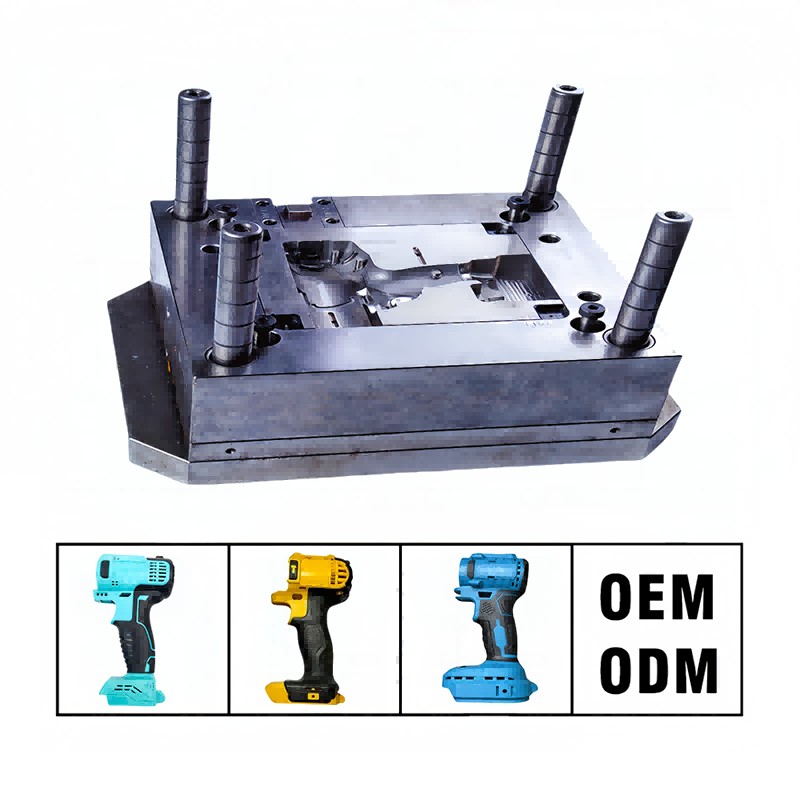
Why Defects Appear in Electric Drill Plastic Shell Mold Production
Defects rarely come from one source. They typically result from the interaction of mold design, material selection, injection parameters, cooling layout, and tooling maintenance. The table below summarizes the most frequently encountered problems, their visible symptoms, and the primary causes.
| Defect | Typical Symptom | Main Causes |
|---|---|---|
| Short shot | Incomplete filling at ribs, bosses, or thin walls | Low injection pressure, poor gate location, insufficient venting |
| Flash | Excess material along parting lines or ejector pins | Excessive clamping force imbalance, worn parting surfaces, high melt temperature |
| Sink marks | Depressions on thick sections or boss areas | Uneven wall thickness, insufficient packing pressure, poor cooling |
| Warpage | Bending or twisting after ejection | Uneven cooling, unbalanced gate layout, excessive residual stress |
| Weld lines | Visible lines where flow fronts meet | Low melt temperature, slow injection speed, poor venting |
| Burn marks | Dark streaks or discoloration at flow ends | Trapped gas, inadequate venting, excessive injection speed |
| Ejector marks | Localized deformation or white marks | Insufficient ejection area, late ejection, insufficient cooling |
| Silver streaks | Silvery surface lines near the gate | Moisture in resin, contaminated material, excessive shear |
Design and Process Factors That Matter Most
A high-quality Electric Drill Plastic Shell Mold must balance structural rigidity, heat dissipation, and assembly fit. The following list highlights the most critical control points:
-
Wall thickness consistency: Keep nominal walls between 2.0 mm and 3.0 mm where possible; abrupt changes create sink marks and warpage.
-
Gate and runner design: Use a balanced runner system and position gates to avoid weld lines in high-stress areas.
-
Cooling channel layout: Conformal cooling or baffles near bosses reduce cycle time and thermal gradients.
-
Venting strategy: Proper vents at flow ends prevent burn marks and short shots.
-
Draft angles: A minimum of 0.5° to 1.0° per side ensures clean ejection without scuffing.
-
Material selection: Glass-filled PA66, ABS, and PC/ABS blends offer different shrinkage and impact profiles.
-
Tool steel and surface treatment: Hardened inserts and polished cavities extend mold life and improve cosmetics.
-
Process window validation: Scientific molding studies establish repeatable parameters before mass production.
How Changhua Controls Defect Rates
Changhua applies a structured approach that combines mold flow simulation, in-house tooling fabrication, and documented process validation. Every Electric Drill Plastic Shell Mold project passes through design review, steel inspection, trial shots, and dimensional layout approval. Our team uses cavity pressure monitoring and statistical process control to detect drift before defects appear. For clients in North America and Europe, we also provide PPAP-level documentation and full traceability.
FAQ: Electric Drill Plastic Shell Mold Common Questions
Q1: What is the most common defect in an Electric Drill Plastic Shell Mold?
A1: Short shot and flash are the most frequent defects. Short shot usually results from insufficient injection pressure, poor gate placement, or trapped air that prevents complete filling of thin ribs and bosses. Flash occurs when molten plastic escapes the cavity along parting lines, ejector pins, or worn inserts, often due to excessive injection pressure, uneven clamping, or tool wear. Both defects are preventable through mold flow analysis, proper venting, and disciplined process control.
Q2: How can warpage be reduced in an Electric Drill Plastic Shell Mold?
A2: Warpage reduction requires balanced cooling, uniform wall thickness, and optimized packing pressure. Designers should place cooling channels close to the cavity surface and avoid large temperature differences between the core and cavity sides. Gate locations should be balanced so that flow fronts meet evenly. After molding, fixtures or cooling jigs can help maintain shape during early shrinkage. In many cases, a Moldflow simulation before steel cutting saves weeks of trial-and-error.
Q3: How does Changhua ensure defect-free production for an Electric Drill Plastic Shell Mold?
A3: Changhua combines simulation, precision machining, and scientific molding. We review every part design for draft, wall thickness, and gate placement, then run mold flow analysis to predict weld lines, air traps, and shrinkage. During trial runs, we document cavity pressure, melt temperature, and cooling time, and we compare dimensional results against the customer's 2D drawing. Only after a stable process window is approved does mass production begin, and we maintain ongoing SPC monitoring to keep defect rates low.
Contact Us
If you are developing a new power tool housing or need to improve yield on an existing Electric Drill Plastic Shell Mold, Changhua is ready to help. Contact our engineering team today for a mold design review, process audit, or quotation. Send your 3D files and requirements, and we will respond with a detailed feasibility assessment and timeline.