

How many layers do most mass-production Coffee Machine PCB use
2026-11-27
Hardware engineers and coffee appliance manufacturers balance cost, circuit density and noise resistance when designing control boards for brewing equipment. Aisen produces reliable Coffee Machine PCB built on high-TG FR4 substrates, optimized for humid, high-temperature environments inside espresso, bean-to-cup and capsule coffee machines. The layer count is determined by feature set, space constraints and EMC requirements, with two-layer and four-layer variants dominating mainstream mass production.
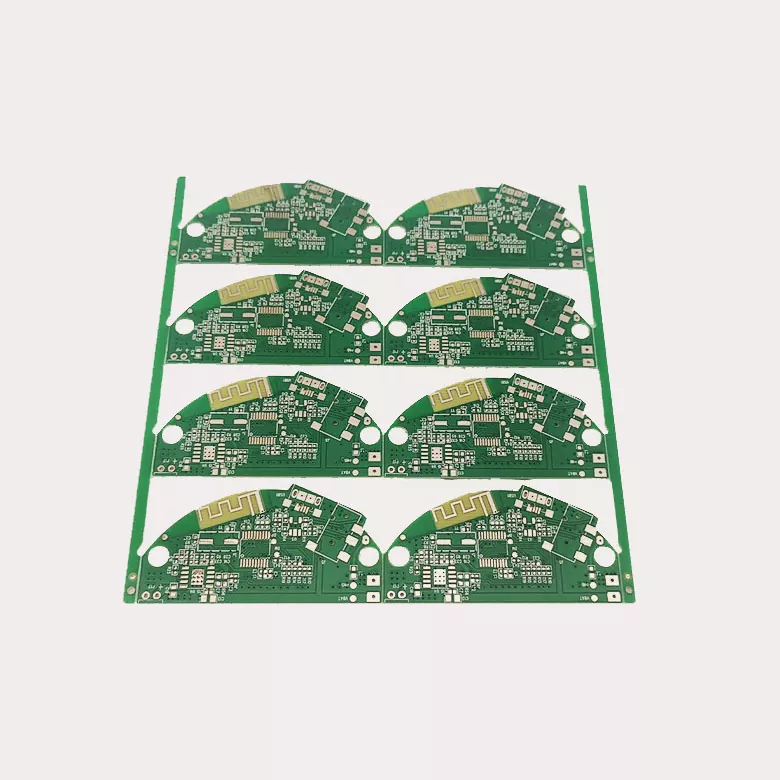
Layer Count Comparison Table
| PCB Layer | Typical Application | Core Benefits | Main Drawbacks |
|---|---|---|---|
| 2-Layer | Basic capsule coffee machines, simple heating and pump control | Low cost, fast lead time, simple routing | Limited space for grounding, prone to signal noise |
| 4-Layer | Smart espresso machines, PID temperature control, WiFi and display circuits | Dedicated power and ground planes, better EMC shielding | Higher fabrication cost and longer production cycle |
| 6+ Layer | High-end commercial multi-group espresso machines | Excellent signal integrity, dense component layout | Rarely used for standard home appliances, premium pricing |
Custom Coffee Machine PCB from Aisen can switch between 2-layer and 4-layer structures according to the BOM and functional requirements of each appliance project.
Practical Design Guidelines
- Choose 2-layer boards for low-complexity models with only basic heating, pump and button control.
- Upgrade to 4-layer designs when adding wireless modules, touch screens or precise PID temperature regulation.
- Separate high-voltage boiler circuits from low-voltage signal tracks to reduce interference in humid coffee machine cabins.
- Prioritize high-TG material regardless of layer count to resist thermal cycling from repeated boiler heating.
Coffee Machine PCB FAQ
Q: Can a 2-layer Coffee Machine PCB pass EMC and safety certification for home coffee appliances? A: Yes, it can meet standard certification requirements if the layout is carefully optimized. Designers need to reserve solid ground areas, shorten high-current traces and isolate signal lines from power circuits. However, 2-layer boards have less natural shielding, so extra filtering components may be required to suppress electrical noise.
Q: Why do most commercial espresso machines adopt a 4-layer Coffee Machine PCB? A: Commercial machines run longer hours and integrate more sensors, group head controls and communication interfaces. The dedicated ground plane and power plane in 4-layer boards stabilize PID temperature signals, reduce ripple and protect sensitive electronics from the high-current boiler circuit. This layout greatly lowers failure rates in busy café environments.
Q: Is a higher layer count always better for a Coffee Machine PCB? A: Not necessarily. Extra layers add manufacturing expense without meaningful performance gain for simple functions. Over-specifying 6-layer or 8-layer boards for basic capsule machines raises unit cost and does not improve reliability. The best layer count matches the circuit complexity, feature list and target market of the coffee equipment.
Final Note
Two-layer and four-layer structures are the dominant choices for mass-produced Coffee Machine PCB, while 6 or more layers are reserved for premium commercial equipment. Aisen offers DFM review, PCB fabrication and PCBA assembly for household and commercial coffee machine projects. Contact us today to submit your Gerber files and functional specifications, and our engineering team will recommend the most suitable layer stack and material configuration.