

How Does a Tablet Antenna Improve Wireless Connectivity?
2026-08-26
Article Summary: A tablet antenna is a critical component that directly affects cellular communication, positioning accuracy, data transmission, and overall wireless performance. As tablets become thinner and are increasingly used for education, field operations, transportation, healthcare, industrial control, and mobile business applications, antenna design must balance RF performance with limited internal space. This article explains how a tablet antenna works, what factors influence its performance, how to choose the right antenna architecture, and how manufacturers can avoid common integration problems. It also explores the role of GPS/BeiDou positioning antennas and 4G data antennas in modern tablet devices, while highlighting how Qianmu Communication can support customized antenna requirements.
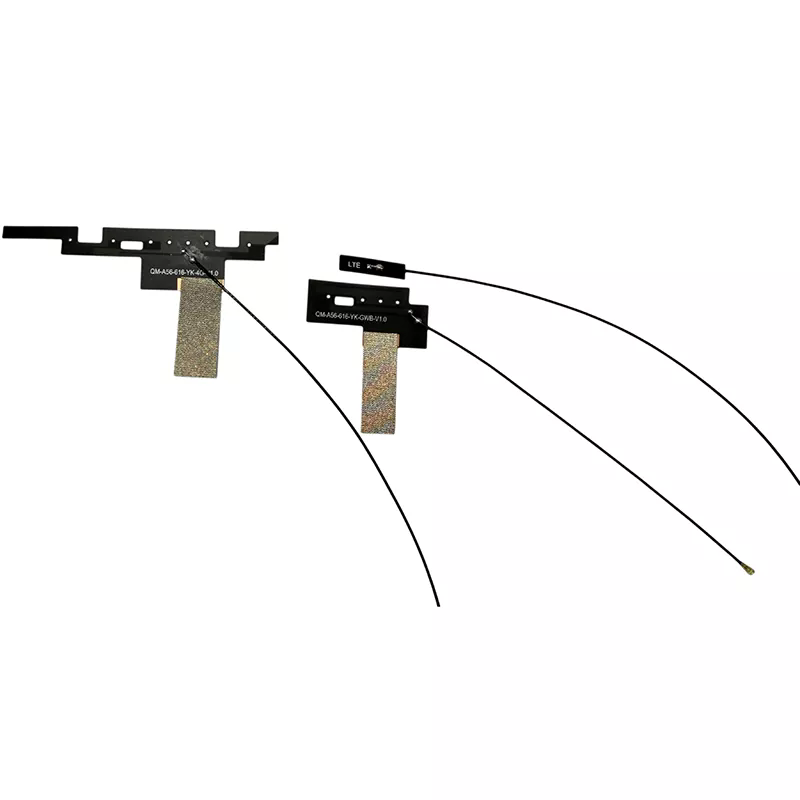
Table of Contents
- 1. What Is a Tablet Antenna?
- 2. Why Is Antenna Performance Important in Tablets?
- 3. How Does a Tablet Antenna Work?
- 4. What Types of Tablet Antennas Are Commonly Used?
- 5. Which Factors Affect Tablet Antenna Performance?
- 6. How Should a Tablet Antenna Be Integrated?
- 7. What Problems Can Poor Antenna Design Cause?
- 8. How Can Manufacturers Select the Right Tablet Antenna?
- 9. How Can Qianmu Communication Support Tablet Antenna Projects?
- 10. Frequently Asked Questions
- 11. Conclusion
Article Outline
- Understanding the function of antennas inside tablet computers
- Explaining the relationship between antenna design and wireless reliability
- Comparing positioning and cellular data antenna applications
- Identifying key RF, mechanical, and environmental considerations
- Providing practical guidance for antenna integration and selection
- Explaining how customized antenna development can address device-specific requirements
1. What Is a Tablet Antenna?
A Tablet Antenna is a radio-frequency component designed to transmit and receive wireless signals inside or around a tablet computer. Although the antenna may occupy only a small part of the device, its performance has a direct influence on communication quality, positioning capability, data reliability, and user experience.
Modern tablets can support several wireless functions simultaneously. Depending on the product configuration, these may include cellular data communication, GPS positioning, BeiDou positioning, Wi-Fi, Bluetooth, and other wireless technologies. Each function may require a different frequency range, antenna structure, matching network, and installation position.
The challenge becomes more complicated as tablets become thinner and more compact. The antenna must operate effectively while sharing limited internal space with batteries, displays, metal frames, speakers, circuit boards, cameras, and other electronic components.
For manufacturers, therefore, selecting an antenna is not simply a matter of choosing a component with a suitable connector. The antenna must work as part of the complete RF system.
2. Why Is Antenna Performance Important in Tablets?
A tablet can contain a powerful processor, high-capacity battery, and advanced modem, but poor antenna performance can still prevent the device from achieving reliable wireless communication.
A well-designed antenna helps maintain stable RF performance when the tablet is used in different orientations and environments. This is particularly important for mobile devices because users constantly change how they hold or position them.
| Application | Antenna Role | Typical User Requirement |
|---|---|---|
| Cellular Data | Transmit and receive mobile network signals | Stable data connection and broad coverage |
| GPS | Receive satellite positioning signals | Reliable positioning and navigation |
| BeiDou | Receive satellite navigation signals | Accurate location information |
| Industrial Tablet | Maintain wireless communication in demanding environments | Consistency and durability |
| Educational Tablet | Support connected learning applications | Reliable connectivity and compact integration |
When antenna performance is inadequate, users may experience slow data transmission, intermittent connectivity, inaccurate positioning, longer connection times, or reduced communication reliability.
3. How Does a Tablet Antenna Work?
The basic principle is the same as other RF antennas: an antenna converts electrical signals into electromagnetic waves during transmission and converts received electromagnetic energy into electrical signals during reception.
Inside a tablet, however, the practical process is influenced by the entire device structure. The antenna is connected to an RF circuit through a feed structure, and its characteristics are affected by the surrounding materials and available ground plane.
During operation, the RF system generates a signal at the required frequency. The antenna radiating element interacts with the electromagnetic field and launches the signal into free space. When the tablet receives a wireless signal, the antenna captures part of that electromagnetic energy and sends it to the RF front end for processing.
Several electrical characteristics are particularly important:
- Operating frequency: The antenna must cover the intended frequency range.
- Impedance: Proper impedance matching helps transfer RF energy efficiently.
- VSWR: A suitable voltage standing wave ratio indicates effective matching between the antenna and RF system.
- Gain: Gain describes the antenna's directional performance and energy concentration.
- Efficiency: Higher efficiency generally means a greater portion of supplied RF power is effectively radiated.
- Radiation pattern: The pattern determines how the antenna radiates or receives signals in different directions.
These parameters cannot be considered independently. A tablet antenna that performs well in a laboratory fixture may behave differently after installation in the final tablet enclosure.
4. What Types of Tablet Antennas Are Commonly Used?
Tablet antenna requirements vary according to the device's wireless functions. Two important applications are positioning and cellular data communication.
Tablet GPS/BeiDou Positioning Antenna
Positioning antennas are designed to receive signals from satellite navigation systems. They are commonly used when tablets need location information for navigation, fleet management, field service, mapping, logistics, education, or industrial applications.
Qianmu Communication develops tablet positioning antenna solutions using ceramic antenna technology for GPS and BeiDou applications. A suitable positioning antenna can help the device maintain reliable satellite signal reception while fitting within the mechanical limitations of a tablet enclosure.
Tablet 4G Data Antenna
A tablet with cellular connectivity requires an antenna capable of supporting the intended LTE frequency bands. Unlike a single-frequency application, a cellular tablet may need to cover multiple bands while maintaining acceptable performance in a compact enclosure.
Qianmu Communication provides built-in 4G data antenna solutions for different tablet applications. These solutions can be developed around the device's mechanical dimensions, RF requirements, frequency coverage, and installation structure.
| Antenna Type | Primary Function | Important Design Considerations |
|---|---|---|
| GPS/BeiDou Antenna | Satellite positioning | Frequency coverage, sensitivity, placement, ground plane |
| 4G LTE Antenna | Cellular communication | Multiple bands, efficiency, matching, isolation |
| Internal Antenna | Compact wireless integration | Available space and surrounding components |
5. Which Factors Affect Tablet Antenna Performance?
One of the most common mistakes in tablet development is evaluating an antenna independently from the device. In reality, the final performance depends on the interaction between the antenna, PCB, enclosure, battery, display, cables, and other components.
Available Installation Space
A tablet antenna needs sufficient physical space to establish an effective electromagnetic field. Extremely limited clearance can reduce efficiency or make impedance matching more difficult.
Metal Components
Metal frames, shielding structures, batteries, brackets, and other conductive components can influence current distribution around the antenna. If the antenna is placed too close to metal without appropriate design compensation, performance may change significantly.
PCB and Ground Plane
The device PCB and its ground structure form an important part of the overall antenna system. A different PCB layout can change the effective electrical environment, even when the physical antenna itself remains unchanged.
Frequency Requirements
Different wireless standards operate at different frequency ranges. A tablet intended for multiple cellular bands requires an antenna architecture capable of maintaining suitable performance across the required spectrum.
User Interaction
Hand effects can alter antenna performance because the user's body absorbs and detunes electromagnetic energy. For handheld products, antenna placement should therefore consider realistic holding positions rather than laboratory conditions alone.
Enclosure Materials
Plastic, glass, composite materials, and metal housings interact differently with RF signals. The enclosure design should be considered early rather than after the antenna has already been selected.
6. How Should a Tablet Antenna Be Integrated?
Successful integration begins before the final mechanical design is frozen. Waiting until the end of development can leave too little space for the antenna or make it difficult to correct RF performance problems.
A practical integration process can include the following steps:
- Define wireless requirements: Identify cellular, positioning, and other wireless functions.
- Confirm frequency bands: Establish the exact frequency ranges required by the target markets and communication modules.
- Review mechanical constraints: Determine available antenna dimensions and possible installation locations.
- Evaluate surrounding components: Identify nearby batteries, displays, metal structures, speakers, cables, and shielding components.
- Select the antenna architecture: Choose a suitable antenna type based on electrical and mechanical requirements.
- Perform matching and tuning: Optimize the antenna with the actual PCB and enclosure rather than relying only on standalone measurements.
- Validate the complete device: Test RF characteristics and real-world wireless performance before mass production.
This approach helps reduce redesign risk and makes it easier to identify whether a performance problem originates from the antenna, RF circuit, mechanical structure, or system integration.
7. What Problems Can Poor Antenna Design Cause?
Poor antenna selection or integration can create problems that are difficult to identify because the symptoms may initially appear to be caused by the modem, network, software, or battery.
- Weak cellular reception: The tablet may lose connection in areas where other devices remain connected.
- Reduced data throughput: Poor RF efficiency can limit practical wireless performance.
- Unstable positioning: An unsuitable GNSS antenna can make location acquisition slower or less reliable.
- High power consumption: Poor RF conditions may force the cellular system to work harder to maintain communication.
- Performance variation: The device may perform differently depending on orientation or how it is held.
- Development delays: Late-stage antenna problems can require changes to mechanical structures or PCB layouts.
For manufacturers, the most expensive antenna problem is often not the component cost itself but the engineering time required to correct a poorly planned integration.
8. How Can Manufacturers Select the Right Tablet Antenna?
When sourcing a tablet antenna, buyers should evaluate more than the nominal frequency range. The antenna must be suitable for the complete product environment.
| Evaluation Item | Questions to Ask | Why It Matters |
|---|---|---|
| Frequency | Does the antenna cover all required bands? | Prevents incomplete network coverage |
| Size | Can it fit within the available space? | Supports practical mechanical integration |
| Efficiency | How efficiently does it radiate or receive energy? | Influences real wireless performance |
| Matching | Can the antenna be tuned for the final device? | Helps compensate for device-level effects |
| Customization | Can dimensions, cable, connector, or structure be customized? | Reduces integration limitations |
| Production | Can the supplier support stable volume production? | Protects long-term supply consistency |
For OEM and ODM projects, it is also useful to provide the antenna supplier with mechanical drawings, PCB information, target frequency bands, connector requirements, installation restrictions, and expected application environment.
9. How Can Qianmu Communication Support Tablet Antenna Projects?
Qianmu Communication is a professional antenna manufacturer and supplier offering tablet antenna solutions for different wireless applications. Its tablet antenna product range includes GPS/BeiDou positioning antennas and 4G data antennas designed for integration into mobile computing devices.
According to its product information, Qianmu develops and manufactures tablet GPS/BeiDou positioning antennas with a focus on ceramic GPS and BeiDou antenna solutions. The company also provides built-in 4G LTE data antennas designed for different tablet applications and frequency requirements.
This product approach is useful for manufacturers that cannot rely on a single standard antenna because every tablet enclosure, PCB configuration, and wireless module can introduce different RF constraints.
Suitable Applications
- Consumer tablets
- Rugged industrial tablets
- Educational tablets
- Automotive tablets
- Field-service terminals
- Location-enabled mobile computing equipment
- 4G-connected tablet devices
Qianmu Communication also emphasizes in-house production and quality control capabilities for its tablet antenna products, supporting both standardized production and application-specific customization.
Why Customization Can Be Valuable
In compact electronics, an off-the-shelf antenna may have suitable nominal specifications but still fail to deliver the expected performance after installation. A customized solution can be developed around the actual mechanical and electrical conditions of the device.
Customization may involve factors such as:
- Antenna dimensions
- Installation position
- Frequency coverage
- Cable length
- Connector configuration
- Mounting method
- Device enclosure constraints
- RF matching requirements
Working with an antenna supplier during the design stage can therefore help manufacturers address RF challenges before the product reaches mass production.
10. Frequently Asked Questions
What is the main function of a tablet antenna?
A tablet antenna transmits or receives electromagnetic signals required by wireless functions such as cellular communication and satellite positioning. Its design determines how effectively the device interacts with wireless networks and satellites.
Can one tablet antenna support multiple frequency bands?
Yes. Some antenna designs are engineered for multi-band operation. However, the achievable performance depends on the required frequency ranges, available space, RF circuit, PCB structure, and final enclosure.
Why does tablet antenna placement matter?
Placement changes the electromagnetic environment surrounding the antenna. Nearby metal components, batteries, displays, cables, and the PCB ground structure can affect impedance, efficiency, radiation characteristics, and overall RF performance.
What is the difference between a tablet GPS antenna and a 4G antenna?
A GPS antenna is designed primarily to receive satellite navigation signals, while a 4G antenna supports cellular communication with mobile networks. Their operating frequencies, electrical requirements, and integration considerations can therefore differ substantially.
Can a tablet antenna be customized?
Yes. Customized antennas can be developed for specific dimensions, frequency requirements, connectors, cables, mounting structures, and device environments. Customization is particularly useful when the tablet has strict internal space limitations.
Does the tablet enclosure affect antenna performance?
Yes. The enclosure can alter the electromagnetic environment around the antenna. Metal housings and conductive structures generally require particularly careful antenna placement and RF tuning.
When should antenna design begin during tablet development?
Antenna planning should begin during the early mechanical and electrical design stages. Early coordination provides more freedom to reserve suitable antenna space and avoid conflicts with batteries, displays, shielding, and other components.
Can Qianmu Communication provide tablet antenna solutions for OEM projects?
Qianmu Communication provides tablet antenna products for positioning and 4G data applications and supports customized solutions for different tablet applications. Its product information indicates support for both volume production and application-specific antenna customization.
11. Conclusion
A tablet antenna is much more than a small RF accessory. It is an essential part of the device's wireless architecture and can influence cellular reliability, positioning performance, data transmission, power efficiency, and user experience.
The right solution must match the target frequency bands while also fitting the tablet's physical dimensions, PCB layout, enclosure, battery, display, and surrounding components. For this reason, antenna selection and integration should be considered during the early stages of product development rather than treated as a final component-selection task.
For manufacturers developing consumer, industrial, educational, automotive, or other connected tablets, Qianmu Communication provides tablet antenna solutions covering GPS/BeiDou positioning and 4G data communication applications. With customized antenna development and production capabilities, the company can help customers address the practical challenges of compact wireless device design.
Looking for a suitable Tablet Antenna for your next device?
Discuss your frequency requirements, available installation space, connector configuration, and application environment with Qianmu Communication. If you need a customized antenna solution for a new tablet project, contact us to discuss your requirements and find a practical solution for your application.