

How Do Air-to-Air Thermoelectric Cooler Assemblies Improve Temperature Control?
2026-10-28
Air-to-Air Thermoelectric Cooler Assemblies provide solid-state temperature control by transferring heat from an enclosed space to the surrounding environment. Unlike conventional compressor-based systems, they use thermoelectric modules, heat sinks, and fans to move heat without a refrigerant circuit. This design can be useful when equipment requires compact cooling, low vibration, controlled airflow, and separation between internal and external air. However, selecting a suitable assembly requires more than checking its rated cooling capacity. Engineers must consider internal heat generation, ambient temperature, enclosure insulation, power supply, airflow, condensation, and control accuracy. This guide explains how these assemblies work, where they are useful, how to evaluate specifications, and how to choose a solution that matches the actual operating conditions.
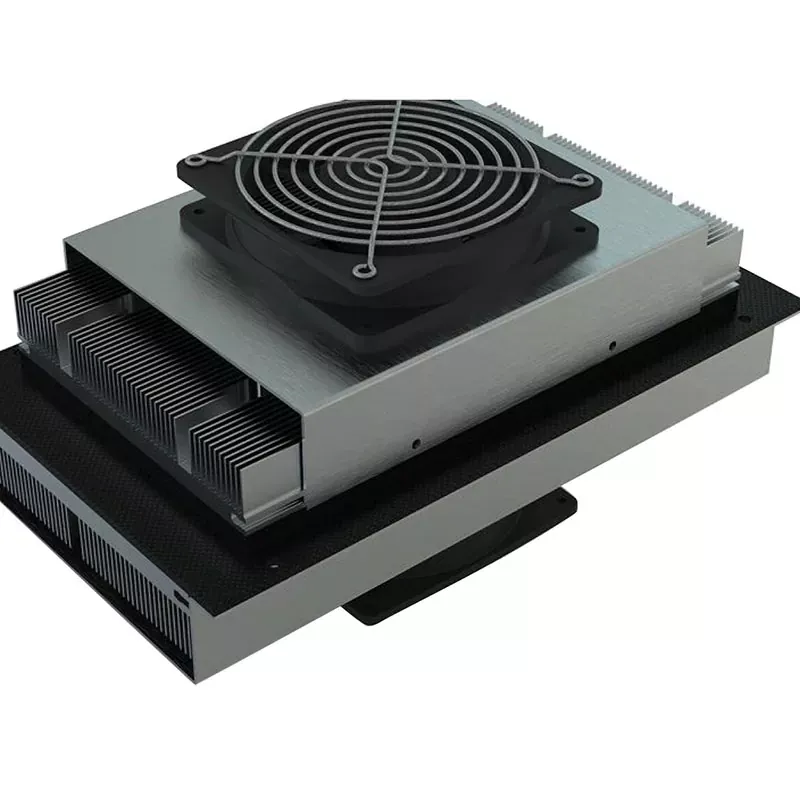
What Are Air-to-Air Thermoelectric Cooler Assemblies?
Industrial electronics, precision instruments, and enclosed control systems often generate heat during operation. When that heat accumulates, component temperatures may rise beyond their preferred operating range, potentially affecting accuracy, reliability, and service life. Traditional ventilation may not be appropriate when an enclosure must remain isolated from dust, moisture, or contaminated ambient air.
Air-to-Air Thermoelectric Cooler Assemblies are integrated thermal management devices designed to transfer heat from internal enclosure air to external ambient air. A typical assembly combines thermoelectric modules, cold-side and hot-side heat exchangers, fans, thermal interfaces, and mechanical mounting components. Depending on the design, a temperature controller and sensor may also be included.
The thermoelectric module creates a temperature difference when supplied with direct current. One side absorbs heat from the internal air, while the opposite side releases that heat to the surrounding environment. Fans circulate air across the heat exchangers to improve heat transfer.
Because the internal and external air streams can remain separated, this architecture is especially useful when direct ventilation could introduce unwanted contaminants into sensitive equipment. The enclosure still needs appropriate sealing and a correctly designed mounting interface for the intended level of environmental protection.
How Does Thermoelectric Cooling Work?
Thermoelectric cooling relies on the Peltier effect. When direct current passes through a suitable thermoelectric module, heat is absorbed at one side and released at the other. The direction of heat transfer depends on current polarity and the module configuration.
Step 1: Absorb Heat from the Enclosure
The cold-side heat exchanger contacts the internal air stream. A fan circulates warm enclosure air across its fins, transferring heat to the exchanger and then to the thermoelectric module. Effective airflow helps reduce temperature differences within the enclosure.
Step 2: Transfer Heat Through the Module
Inside the module, semiconductor elements transfer heat when electrical current flows through them. Unlike a conventional compressor system, this process does not require a mechanically driven refrigerant cycle. The thermoelectric module itself has no moving mechanical parts, although the complete assembly commonly uses fans.
Step 3: Reject Heat to the Environment
The hot-side heat exchanger receives the transferred heat and the electrical energy converted into heat within the module. An external fan moves ambient air across the heat sink to discharge this energy into the surroundings. Restricted external airflow can raise the hot-side temperature and reduce cooling performance.
Step 4: Regulate the Target Temperature
A controller may use a temperature sensor to switch or modulate power according to the required setpoint. Control behavior depends on the system design, sensor placement, thermal load, and control strategy. Applications requiring tight temperature stability may need a suitable proportional controller and careful sensor integration.
Actual cooling capacity changes with operating conditions. A module's maximum rated capacity is generally measured at a particular temperature difference and test condition; it should not be treated as the cooling capacity available at every operating temperature.
Main Components and Their Functions
Each component contributes to the assembly's thermal performance, electrical behavior, noise, and reliability. Understanding these parts makes it easier to compare technical proposals from different suppliers.
| Component | Main Function | What Buyers Should Check |
|---|---|---|
| Thermoelectric module | Transfers heat through the Peltier effect | Cooling capacity under defined conditions, voltage, current, and temperature differential |
| Cold-side heat exchanger | Absorbs heat from enclosure air | Fin design, thermal resistance, airflow, and condensation provisions |
| Hot-side heat exchanger | Releases heat to ambient air | Heat rejection capacity, fan clearance, and maximum operating temperature |
| Fans | Circulate air across heat exchangers | Airflow, static pressure, noise, power consumption, and expected service life |
| Temperature sensor and controller | Monitor and regulate operating temperature | Sensor accuracy, control method, response time, and compatibility |
| Mounting and insulation | Support the assembly and limit unwanted heat leakage | Mechanical fit, air-path separation, sealing, and thermal bridging |
The complete assembly matters more than any individual component rating. A powerful thermoelectric module may deliver disappointing results if the heat sinks are undersized, the fans cannot overcome system resistance, or heat leaks around the cold-side interface.
Key Benefits for Industrial Applications
Compact, Integrated Construction
Many thermoelectric assemblies combine cooling modules, heat exchangers, and fans into one integrated unit. This can simplify thermal system design and reduce the need for a separate refrigerant circuit. The actual footprint and installation depth still depend on cooling capacity and mechanical requirements.
Low Vibration and Controlled Operation
Thermoelectric modules operate without compressors, which can be beneficial for instruments sensitive to mechanical vibration. Nevertheless, fan vibration and acoustic noise remain relevant. Fan selection, mounting, and maintenance influence the noise and vibration of the complete assembly.
Isolation from External Contaminants
With properly separated air paths, the assembly can cool an enclosure without directly drawing outside air into it. This can help protect internal equipment from dust, moisture, and airborne contaminants. The enclosure, seals, wiring entries, and mounting interface must be designed together to achieve the required protection.
Precise Temperature Management
When paired with suitable sensors and control electronics, thermoelectric systems can maintain a controlled temperature range for sensitive applications. Achievable stability depends on heat load, ambient conditions, sensor location, controller design, and system response. Buyers should request performance data at the intended operating point.
No Refrigerant Circuit
Thermoelectric cooling does not rely on a conventional refrigerant loop. This eliminates refrigerant leakage from the thermoelectric cooling mechanism itself, although it does not remove the need for electrical safety, thermal protection, or environmental sealing.
These advantages make air-to-air thermoelectric assemblies attractive for specific applications. They are not automatically the most energy-efficient option for every cooling load, so system-level power consumption should always be evaluated.
Where Are Air-to-Air Thermoelectric Cooler Assemblies Used?
Electronics Enclosures and Control Cabinets
Industrial controllers, power electronics, communication equipment, and automation systems can generate significant heat inside enclosed cabinets. An air-to-air assembly can remove this heat while helping maintain separation between internal and external air. Correct sizing is particularly important for cabinets exposed to high ambient temperatures or direct sunlight.
Telecommunications Equipment
Outdoor telecommunications cabinets may need temperature control while limiting dust and moisture ingress. Designers should evaluate ambient temperature extremes, solar loading, enclosure insulation, fan protection, and the required environmental rating before choosing an assembly.
Medical and Analytical Instruments
Laboratory analyzers, diagnostic instruments, and sample storage equipment may require compact cooling with limited vibration. Air-to-air systems can support temperature management when the internal air can be circulated effectively. Applications involving sensitive samples must also consider temperature uniformity, recovery time, and condensation risks.
Industrial Monitoring and Optical Equipment
Optical sensors, measurement devices, and monitoring equipment may perform best within a defined temperature range. An integrated thermoelectric assembly can provide localized thermal management where space is limited and external airflow must remain isolated from sensitive components.
Specialized Storage and Compact Chambers
Small enclosed compartments can benefit from forced internal circulation and active heat transfer. However, applications involving frequent door openings, high humidity, or substantial heat loads require careful analysis of thermal recovery and moisture accumulation.
How to Select the Right Air-to-Air Thermoelectric Cooler Assembly
A suitable assembly must handle the real heat load under the worst expected operating conditions. The following process helps engineering teams avoid selecting a unit based only on a headline cooling-capacity figure.
Step 1: Calculate the Total Heat Load
Estimate heat generated by internal electronics, motors, power supplies, and other components. Include heat entering through enclosure walls, solar exposure where applicable, and any additional thermal loads. Do not assume that the nominal power rating of a component equals its actual heat generation under every operating condition.
Step 2: Define the Temperature Requirements
Specify the desired enclosure temperature, minimum and maximum ambient temperatures, and acceptable temperature variation. A unit that performs adequately in a cool laboratory may not provide the same cooling capacity in a hot outdoor environment.
Step 3: Check Cooling Capacity at the Operating Point
Request performance curves or test data showing available cooling capacity at the intended hot-side temperature and temperature differential. Consider an appropriate engineering margin for variations in ambient conditions, component aging, and uncertain heat loads. The required margin should reflect the actual application rather than an arbitrary universal percentage.
Step 4: Verify Electrical Requirements
Confirm the DC supply voltage, current draw, startup behavior, wiring, connector type, and controller compatibility. Ensure that the power supply can support the complete assembly, including fans and control electronics, under the specified operating conditions.
Step 5: Confirm Space and Airflow
Check the installation opening, mounting dimensions, clearance around the external heat sink, and internal airflow path. Poorly arranged ducts or nearby obstructions can reduce effective heat transfer even when the assembly is correctly rated.
Step 6: Plan Condensation Management
When the cold-side surface falls below the dew point of the internal air, moisture may condense. Determine whether the operating conditions can produce condensation and specify appropriate drainage, insulation, sealing, and control measures.
Step 7: Validate the Complete System
Test a representative installation under expected maximum heat load and ambient temperature. Monitor enclosure temperature, hot-side temperature, electrical consumption, noise, and humidity. A complete system test is more informative than relying solely on a standalone module specification.
Thermoelectric Cooling vs. Compressor Cooling
Thermoelectric and compressor-based systems use different mechanisms and suit different operating requirements. Comparing their practical characteristics helps prevent oversizing, underperformance, and unnecessary operating costs.
| Evaluation Factor | Air-to-Air Thermoelectric | Compressor-Based Cooling |
|---|---|---|
| Cooling mechanism | Solid-state heat transfer using DC-powered modules | Refrigeration cycle with compressor and refrigerant |
| Mechanical vibration | Generally low; fans still produce vibration | Depends on compressor and fan design |
| Refrigerant circuit | Not required | Normally required |
| Cooling capacity | Depends strongly on temperature differential and assembly design | Depends on system capacity and operating conditions |
| Energy efficiency | Can be advantageous for compact or specialized loads, but may be lower at large loads | Often advantageous for larger continuous cooling loads |
| Typical design priority | Compactness, isolation, low vibration, and controlled temperature | Higher cooling capacity and efficiency for suitable applications |
These are general engineering tendencies rather than absolute rules. Actual performance depends on the specific products, temperature conditions, control strategy, and installation. Compare complete-system power consumption and cooling performance at the same design conditions before making a purchasing decision.
Installation and Condensation Management
Maintain Separate Air Paths
The internal and external air streams should follow their intended routes without unwanted bypass. Poor sealing or an incorrectly designed mounting opening can allow warm ambient air to enter the enclosure or reduce the effectiveness of the heat exchangers.
Provide Sufficient External Clearance
The hot-side fan must have adequate access to ambient air and a clear exhaust path. Avoid placing the assembly directly against a wall or inside a restricted space unless the design explicitly accommodates those conditions. Follow the manufacturer's specified clearances.
Insulate Unwanted Thermal Bridges
Metal structures connecting hot and cold regions can conduct heat back toward the cooled enclosure. Where practical, use appropriate insulation and mounting arrangements to limit parasitic heat transfer without compromising structural integrity or sealing.
Prevent Moisture-Related Damage
Condensation is a key design concern when the cold-side surface falls below the dew point. Potential measures include temperature control, suitable insulation, drainage provisions, and protection of electrical components. Drainage design must not compromise enclosure protection or introduce an unintended path for contaminants.
Secure the Assembly and Electrical Connections
Follow the manufacturer's instructions for mounting pressure, fasteners, gasket placement, grounding where required, and cable routing. Incorrect installation can distort interfaces, impair heat transfer, damage seals, or create electrical hazards.
Maintenance and Troubleshooting for Better Performance
Thermoelectric modules have no compressor mechanism, but a complete cooling assembly still contains components that require inspection. Preventive maintenance helps identify airflow restrictions and electrical issues before they cause temperature instability.
| Observed Problem | Possible Cause | Recommended Check |
|---|---|---|
| Enclosure temperature is too high | Insufficient capacity, blocked airflow, excessive heat load | Review heat load, fan operation, hot-side clearance, and operating conditions |
| Temperature fluctuates excessively | Sensor placement, control settings, variable heat load | Check sensor accuracy, controller behavior, and airflow distribution |
| Moisture appears inside the enclosure | Cold surfaces below dew point or ineffective sealing | Inspect humidity conditions, seals, drainage, and temperature settings |
| Cooling performance declines over time | Dust buildup, fan degradation, poor heat rejection | Inspect heat sinks, fans, electrical connections, and ambient conditions |
| Unusual noise develops | Fan wear, loose fasteners, vibration, obstruction | Inspect fan condition, mounting hardware, and airflow paths |
Before performing maintenance, follow the equipment manufacturer's safety procedures and disconnect power where required. Do not assume every temperature problem is caused by a failed thermoelectric module; airflow, heat load, installation, and control issues should also be investigated.
How to Evaluate an Air-to-Air Thermoelectric Cooler Supplier
Choosing a supplier is an engineering decision as well as a purchasing decision. A suitable partner should be able to translate the application's thermal requirements into a defined assembly specification.
Technical Capability
Ask whether the supplier can evaluate heat load, ambient temperature, enclosure dimensions, cooling targets, and electrical limitations. Request performance curves, dimensional drawings, wiring details, and relevant test reports for the proposed configuration.
Customization and Integration
Some projects require special mounting dimensions, fan configurations, connectors, sensors, controllers, or operating voltages. Confirm which changes are available, how they affect cooling performance, and whether a prototype can be evaluated before production.
Quality and Verification
Discuss incoming inspection, assembly testing, performance verification, and the handling of nonconforming products. If the application is safety-critical or subject to industry requirements, specify the applicable standards and documentation before finalizing the design.
Commercial and After-Sales Support
Compare lead times, minimum order quantities, sample availability, warranty terms, technical support, and long-term component availability. A quotation should clearly identify the model, operating conditions, included accessories, and any limitations affecting the application.
Foshan TEH Electric Appliance Co., Ltd. is the company brand associated with the X-Meritan thermoelectric product website. Buyers exploring air-to-air thermoelectric cooling solutions should confirm the specific model, technical specifications, manufacturing arrangements, and commercial terms directly with the company.
- Required internal temperature and ambient temperature range
- Estimated total heat load in watts
- Enclosure dimensions and installation space
- Available DC voltage and maximum current
- Humidity, dust, vibration, and environmental protection requirements
- Required quantity, prototype schedule, and target delivery date
Frequently Asked Questions About Air-to-Air Thermoelectric Cooler Assemblies
1. What is an air-to-air thermoelectric cooler assembly?
It is an integrated cooling device that transfers heat from internal enclosure air to external ambient air using thermoelectric modules, heat exchangers, and fans. It can help control the temperature of enclosed electronics and other sensitive equipment without a conventional refrigerant circuit.
2. How does an air-to-air thermoelectric cooler work?
Direct current powers the thermoelectric module, which absorbs heat on one side and releases it on the other. The cold-side exchanger removes heat from the enclosure, while the hot-side exchanger and fan discharge that heat into the surrounding environment.
3. Are thermoelectric cooler assemblies energy-efficient?
Efficiency depends on the required temperature difference, cooling load, ambient conditions, module selection, and heat exchanger design. Thermoelectric systems can suit compact or specialized applications, but compressor-based systems may consume less energy for larger cooling loads. Compare complete-system performance under equivalent operating conditions.
4. Can an air-to-air thermoelectric cooler operate in high ambient temperatures?
It can operate within the limits of its specified design, but cooling capacity may decrease as the hot-side temperature rises. Confirm the required capacity at the maximum ambient temperature and ensure the hot-side heat exchanger has adequate airflow.
5. Do these cooling assemblies require regular maintenance?
Maintenance requirements depend on the environment and design. Periodic inspection of fans, heat sinks, mounting hardware, wiring, seals, and condensation provisions can help preserve performance. Follow the manufacturer's maintenance schedule.
6. Can thermoelectric cooling assemblies cause condensation?
Yes. If a cold-side surface falls below the dew point of the surrounding air, moisture can condense on it. The design should consider humidity, operating temperature, insulation, drainage, sealing, and control strategy.
7. What information is needed to select a suitable model?
Key information includes the heat load, target temperature, maximum and minimum ambient temperatures, available voltage and current, enclosure dimensions, airflow restrictions, and environmental requirements. These details help a supplier recommend an assembly with suitable performance and dimensions.
8. Can air-to-air thermoelectric cooler assemblies be customized?
Depending on the supplier, customization may include cooling capacity, mechanical dimensions, mounting interfaces, fan selection, connectors, sensors, and control options. Confirm the available configurations and request technical drawings before approving a custom design.
9. What is the difference between a thermoelectric module and a complete assembly?
A thermoelectric module is the component that transfers heat when powered. A complete assembly integrates the module with heat exchangers, fans, mounting structures, thermal interfaces, and potentially sensors and control electronics. The complete assembly determines how effectively the module performs in the actual application.
Find the Right Air-to-Air Thermoelectric Cooling Solution for Your Equipment
Need dependable temperature control for an industrial cabinet, telecommunications enclosure, medical instrument, or precision electronic system? Foshan TEH Electric Appliance Co., Ltd. can be contacted through the X-Meritan website to discuss your thermoelectric product requirements.
Share your heat load, operating temperatures, power supply, installation dimensions, and target quantity to help establish the right technical starting point. Request product specifications and discuss customization, sample evaluation, and quotation requirements for your application.
Contact Us for Technical Details and a QuotationConfirm model-specific cooling performance, electrical ratings, environmental limits, and delivery terms before placing an order.